Signs It's Time for Assisted Living: A Guide for San Antonio Families
A calm guide to changes at home, caregiver strain, family conversations, respite stays and San Antonio care costs.
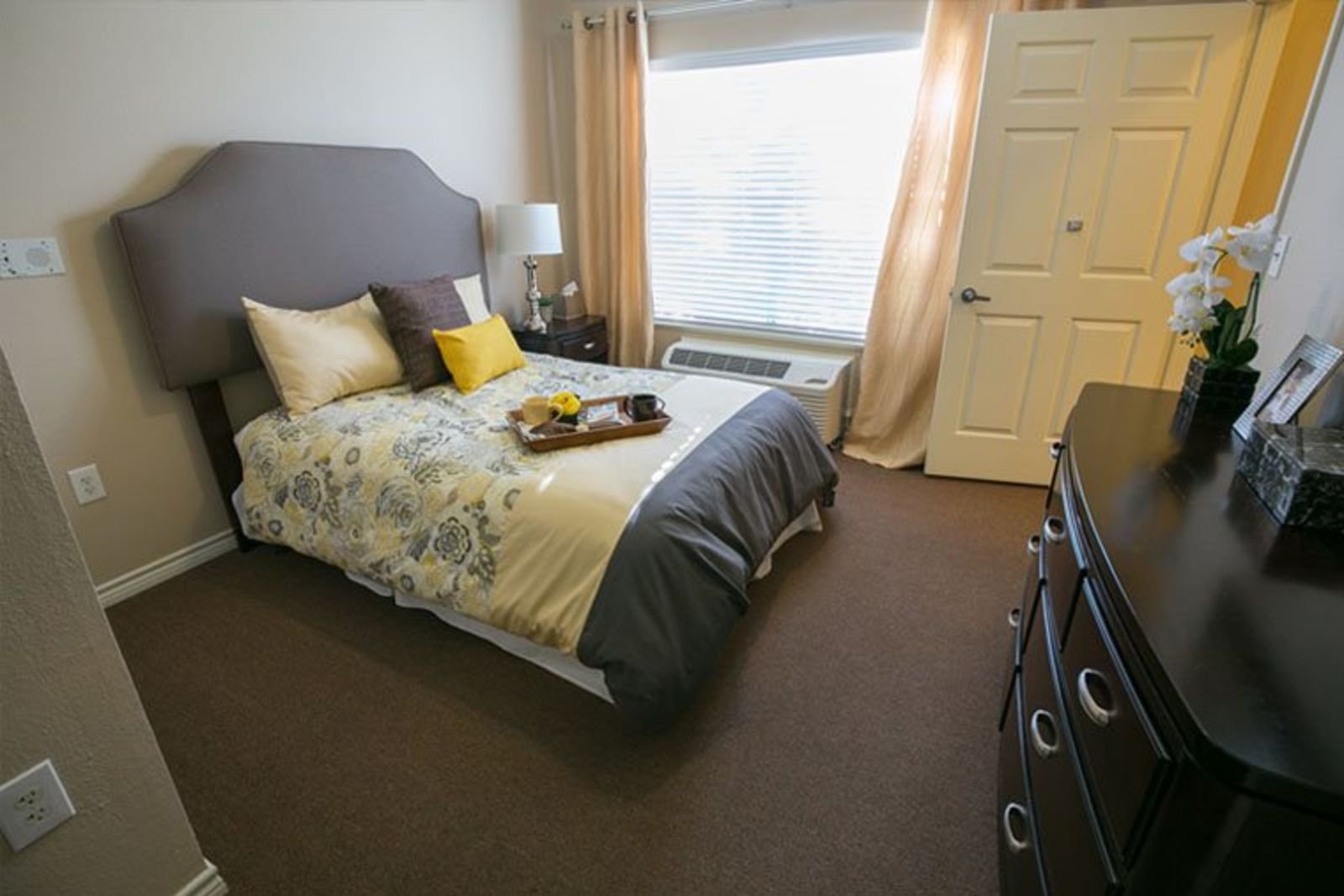
A search for “signs it's time for assisted living San Antonio” often begins with small worries rather than a crisis: food left untouched, a favorite chair piled with laundry, or a daughter lying awake after another worried phone call. No single event settles the question. The useful test is whether daily life is becoming harder, less safe or more isolated, and whether family help still closes the gap.
Assisted living deserves a calm discussion when support with routines, meals, mobility or medication could make the day more manageable. It is not a verdict on a parent's independence. Start with specific observations, include your parent in every decision possible, and allow time for questions before treating a move as settled.
Signs it's time for assisted living San Antonio families often notice
Look for patterns across several weeks. A missed bill can be an accident; repeated unpaid bills, declining hygiene and an empty refrigerator suggest a broader problem. Northwest San Antonio homes that once felt easy to manage can become demanding when stairs, yard work, driving near Loop 410 or Interstate 10, and errands all require more effort.
- Bathing, dressing or toileting is delayed, avoided or needs repeated prompting.
- Meals are skipped, food spoils, or cooking feels unsafe or exhausting.
- Walking, rising from a chair or using stairs causes visible hesitation.
- Housekeeping, laundry and basic repairs accumulate despite family help.
- Appointments, mail or household paperwork are regularly missed or confused.
- Family visits increasingly become work sessions rather than time together.
Write down what changed, when it happens and what help is already in place. These notes support a more useful discussion than labels such as “declining.” They also make it easier to compare remaining at home with added help and assisted living in San Antonio, without assuming that either choice is automatically right.
Safety, memory and medication concerns
Safety concerns deserve prompt attention even when the house looks tidy. Watch for a stove left on, doors left open at night, unexplained bruises, difficulty judging traffic, or getting lost on a familiar route. Medication concerns can include repeated doses, missed doses, expired bottles or uncertainty about why a medicine is prescribed. Do not reorganize prescriptions on your own; ask the prescriber or pharmacist to review the concerns.
Memory changes do not automatically require a particular setting, but supervision needs should be discussed plainly. For some families, memory care becomes relevant when a person needs a more structured environment and consistent support with daily routines. Memory care should be understood as support, supervision and environment, not a promise to improve or reverse a condition. Immediate danger calls for urgent professional help rather than waiting for a routine tour.
Social isolation and caregiver strain matter too
Social changes can be easier to miss. A parent who stops attending a faith community, avoids longtime friends, eats alone most days or no longer answers the phone may be losing more than transportation. Ask what has made each activity difficult. Hearing, mobility, grief, fear of falling and low energy can look similar from a distance.
Caregiver strain is also relevant. Interrupted sleep, missed work, constant checking and growing irritability are signs that the current arrangement may be fragile. A spouse who insists everything is fine may simply be protecting the family from worry. Naming the strain is not disloyal. It allows the family to discuss help before exhaustion turns every decision into an emergency.
Seen together, these patterns turn a broad search for “signs it's time for assisted living San Antonio” into a practical family question: which tasks need support, and who can reliably provide it?
Starting the conversation without taking over
Choose a quiet time, not the middle of an argument or immediately after a frightening mistake. Ask permission to talk about what you have noticed. Use concrete language about laundry piling up and why the stairs worry you. Then stop and listen. Your parent may be grieving privacy, driving, familiar surroundings or control over money.
- Ask what feels hardest now and what your parent wants to preserve.
- Describe a few observations without diagnosing or exaggerating.
- Invite suggestions, including help at home, adult day support or a community visit.
- Agree on a small next step and a time to revisit it.
- Include siblings or trusted professionals only with clear roles and, where possible, your parent's consent.
If memory loss limits understanding, dignity still requires simple explanations, choices and patience. Avoid presenting a tour as a trick or threatening abandonment. A series of respectful conversations usually gives everyone more room than a single family meeting with a decision already made.
Using respite and a visit to test the fit
A short break can provide information that a brochure cannot. The National Institute on Aging describes respite care as temporary help in the home, at an adult day center or through a short residential stay. The Alzheimer's Association also explains respite options for dementia caregivers. Ask whether a trial stay is available, what it includes and how routines, medication and family communication would be handled.
During a visit, notice whether your parent can use the bathroom and dining space comfortably, how staff respond to questions and whether the daily rhythm feels respectful. The William Senior Living is at 9203 Cinnamon Hill Dr in northwest San Antonio's 78240 area and offers assisted living and memory care. Its Bexar County location can be considered alongside proximity to family, the South Texas Medical Center area and familiar routes, without letting convenience decide everything.
What San Antonio cost figures mean for planning
Cost figures are best used as boundaries for planning, not as predictions of a particular bill. The CareScout Cost of Care Survey 2025, with data collected from July through November 2025, reports a San Antonio Area assisted living monthly median of $5,885 and an annual figure of $70,620. Texas statewide figures are $5,666 monthly and $67,992 annually; national figures are $6,200 monthly and $74,400 annually. The metro median is $219 higher than the Texas figure and $315 lower than the national figure.
| Care arrangement | Rate or monthly figure | Annual figure |
|---|---|---|
| Assisted living | $5,885 monthly median | $70,620 |
| Non-medical in-home caregiver | $30 hourly | — |
| In-home care at 20 hours a week | $2,600 monthly | — |
| In-home care at 44 hours a week | $5,720 monthly | — |
| In-home care at 168 hours a week | $21,840 monthly | — |
| Adult day health care | $90 daily; $1,950 monthly | — |
| Nursing home, semi-private room | $6,372 monthly | $76,468 |
| Nursing home, private room | $8,213 monthly | $98,550 |
These arrangements are not interchangeable. According to CareScout, in-home care at 44 hours a week is $5,720 monthly, $165 below the assisted living median, but housing, meals and home upkeep remain separate. A schedule of 20 hours a week comes to $2,600 monthly, while around-the-clock care at 168 hours a week comes to $21,840. Those figures show why the number of covered hours matters more than an hourly rate alone.
Nursing home figures reflect a different care setting, not simply a higher-priced version of assisted living. CareScout's survey lists semi-private and private rooms at $6,372 and $8,213 monthly in the San Antonio Area. Ask every provider what its quote includes, how care-level changes affect charges and which services cost extra. For current rates at The William Senior Living, call the community directly; this article is not a price quote.
Coverage, insurance and Veterans benefits
Medicare has a firm limit that surprises many families. Medicare's long-term care coverage guidance says it does not cover long-term custodial care when that is the only care needed, and most long-term care is custodial. Do not assume that a hospital stay or a Medicare card will cover assisted living room, board or daily support.
Long-term care insurance may pay for assisted living, depending on the policy. Benefits commonly depend on an elimination period and on needs involving daily activities or cognitive impairment. Read the actual contract and ask the insurer to confirm eligible settings, benefit triggers and documentation. For wartime-era Veterans and surviving spouses, VA Aid and Attendance may add to a pension when daily help or other qualifying circumstances are present; eligibility and countable income require individual review.
The VA pension rates page explains current rate tables, net worth rules and review of certain asset transfers before a claim. A VA-accredited representative can help a family avoid assumptions about eligibility or timing.
Texas safeguards and local next steps
Texas licensing offers a practical checklist. Texas Health and Human Services explains Type A and Type B assisted living licenses, including differences in evacuation ability, emergency direction-following and nighttime attendance. Facilities advertising care for Alzheimer's disease or related disorders must hold the required Alzheimer's certification. Ask which license applies and how a community determines whether it can meet changing needs.
For eligible Texas Medicaid members, the STAR+PLUS assisted living services handbook describes assisted living services through Home and Community Based Services when level-of-care, licensing and managed-care contract requirements are met. Members remain responsible for room and board and any applicable copayment, and interest lists may apply. The Eldercare Locator can connect families with the local Area Agency on Aging for guidance.
A sound decision brings together your parent's wishes, observed needs, professional input and a sustainable budget. Revisit the plan when health or caregiver availability changes. The purpose is not to prove that a parent can no longer cope; it is to choose support that preserves dignity, safety and connection.
Frequently asked questions
What are the clearest signs it may be time for assisted living in San Antonio?
Look for repeated difficulty with bathing, dressing, meals, mobility, housekeeping or medication routines. Also notice an empty refrigerator, unsafe cooking, getting lost, growing isolation and caregiver exhaustion. In San Antonio, consider whether driving, home maintenance and the distance between family members make the current plan unreliable. A single incident may not require a move, but several connected concerns justify an assessment and a family discussion.
How can I talk to my parent about assisted living without causing conflict?
Choose a calm moment and ask permission to share specific observations, such as spoiled food or missed medication. Explain your concern without blaming, then ask what your parent wants and what feels hardest. Offer manageable next steps, including professional guidance or visiting a San Antonio community. Avoid making the decision in secret, and allow follow-up conversations whenever your parent can participate.
Does Medicare pay for assisted living in San Antonio?
Medicare does not cover long-term custodial care when that is the only care needed, so families should not assume it will pay for assisted living in San Antonio. Review long-term care insurance directly with the insurer. Veterans and surviving spouses can ask about VA pension benefits, including Aid and Attendance. Texas Medicaid's STAR+PLUS program has separate eligibility and provider requirements.
Can a respite stay help our family decide about assisted living?
A respite stay can help a family observe routines, support needs and comfort without immediately committing to a permanent move. Ask San Antonio providers whether short stays are available, what they include, how medications are handled and how families receive updates. Respite can also give a spouse or adult child a temporary break. It should provide information and relief, not pressure your parent toward a predetermined decision.
Where is The William Senior Living, and what care does it offer?
The William Senior Living is at 9203 Cinnamon Hill Dr in northwest San Antonio's 78240 area, in Bexar County. It offers assisted living and memory care. Families should call for current rates and ask what each care level includes, how needs are assessed and what happens if needs change. Memory care should be discussed as support, supervision and environment rather than as a treatment or a promised outcome.
Talk with The William Senior Living
If you are weighing care options in San Antonio, call (737) 313-2131 or visit and tour. Our team can talk through current availability, rates and next steps. Please confirm all details directly, since published figures and listings change over time.
Sources
- CareScout Cost of Care Survey 2025
- VA Aid and Attendance and Housebound benefits
- VA pension rates (current)
- Medicare: long-term care coverage
- Eldercare Locator (U.S. Administration for Community Living)
- National Institute on Aging: What is respite care?
- Alzheimer's Association: respite care
- ACL: What is long-term care insurance
- Texas HHS: Assisted Living Facilities (ALF)
- Texas HHS STAR+PLUS Handbook 7200: Assisted Living Services
Cost figures are 2025 medians from the CareScout Cost of Care Survey and are not quotes for The William Senior Living. Program rules and benefit amounts were checked on the linked official pages in November 2026 and can change.