Assisted Living vs In-Home Care Costs in San Antonio, TX
A local look at hourly home care, monthly assisted living medians, hidden household costs, and questions that can clarify a family’s next step.
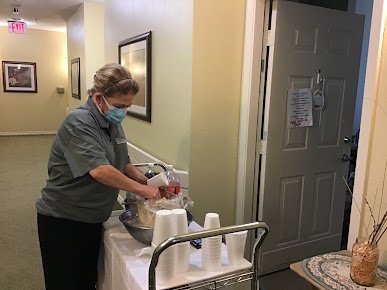
For families comparing the assisted living vs in-home care cost in San Antonio, TX, the monthly bill is only part of the decision. Home care is commonly built around an hourly schedule, while assisted living is generally discussed as a monthly residence and care arrangement. A fair comparison asks how much help is needed across the full week, who covers the gaps, and which ordinary household expenses remain. The local figures below come from CareScout’s 2025 Cost of Care Survey, with data collected from July through November 2025. CareScout labels the metro region the San Antonio Area; it is the reference used here for San Antonio and Bexar County.
San Antonio costs at a glance
The table uses CareScout’s San Antonio Area figures so that unlike schedules can be viewed side by side. Assisted living is shown as a median; home care is shown at selected weekly hours.
| Care or schedule | San Antonio Area cost | How to read it |
|---|---|---|
| Non-medical in-home caregiver | $30 per hour | Hourly paid caregiver time |
| Home care, 20 hours a week | $2,600 per month | Calculated from the hourly rate |
| Home care, 44 hours a week | $5,720 per month | CareScout’s standard monthly schedule |
| Assisted living | $5,885 monthly; $70,620 annually | Metro median, not a community quote |
| Home care, 168 hours a week | $21,840 per month | Calculated around-the-clock schedule |
The 20-hour and 168-hour monthly totals are calculated from the San Antonio hourly rate, while the 44-hour total is CareScout’s standard monthly estimate. Neither a median nor a scheduling illustration is a quote. They also do not establish that overnight supervision, meals, transportation, personal support, or backup coverage are included in the same way.
Assisted living vs in-home care cost in San Antonio, TX
At 20 hours a week, San Antonio home care is $2,600 a month, below the $5,885 assisted living median. That lower total purchases a limited block of caregiver time, not continuous coverage. At CareScout’s standard 44 hours a week, home care is $5,720 a month. Assisted living is $165 higher at the median, but the two amounts still may not buy identical bundles of housing, food, supervision, and personal support. The difference should therefore prompt a review of services, not a quick conclusion that the options are interchangeable.
The contrast becomes sharper at 168 hours a week, when the calculated home-care total is $21,840 a month. These CareScout-based scenarios explain why the answer can change as needs increase. A spouse or adult child should map actual help by time of day before assuming that a lower-hour schedule is sufficient. It is also reasonable to ask a home-care agency about minimum visits, weekend scheduling, backup coverage, and whether the proposed arrangement matches the assistance needed.
The hidden costs of staying at home
Staying home can avoid a move, but it does not freeze the household budget. Some expenses are easy to overlook because they arrive on separate bills or are absorbed by relatives.
- Home changes and upkeep: A ramp, grab bars, improved lighting, or a bathroom adjustment may be considered alongside ordinary repairs, appliance costs, and yard work. Needs vary by house.
- Utilities and food: Electricity, water, internet, groceries, and household supplies continue whether care is paid by the hour or delivered by relatives.
- Transportation and coordination: Rides to appointments, prescription pickups, schedule changes, and communication among helpers take time and may involve additional paid services.
- Family time: A spouse may cover nights, or an adult child may leave work, handle meals, and remain on call. No invoice does not mean no cost.
- Backup coverage: Illness, travel, or a caregiver’s other obligations can open gaps. A plan should name who steps in and how quickly that can happen.
None of these items has a universal San Antonio price. A written household budget makes the assisted living vs in-home care cost comparison in San Antonio, TX, more concrete because it places paid care beside expenses that already exist.
How the metro compares with Texas and the nation
According to CareScout, the San Antonio Area assisted living median is $5,885 a month and $70,620 a year. Texas statewide is $5,666 a month and $67,992 a year, making the metro median $219 higher per month. The national median is $6,200 a month and $74,400 a year, putting San Antonio $315 lower per month. For non-medical in-home caregivers, the San Antonio hourly rate is $30, the same as Texas statewide at $30; the national hourly rate is $35.
These are broad reference points, not measures of quality or predictions of an individual quote. They can help a family place a San Antonio proposal in context, but the useful work remains local: confirm services, schedules, care needs, and the terms of any rate change.
Where adult day care, nursing homes and memory care fit
CareScout also lists San Antonio Area adult day health care at $90 a day and $1,950 a month. That can be a distinct resource for daytime support, but it does not describe overnight or continuous supervision. Nursing home care is listed at $6,372 a month for a semi-private room and $8,213 for a private room, with annual figures of $76,468 and $98,550. The monthly nursing home rates are $487 and $2,328 above the assisted living median, respectively.
A nursing home is a different care setting, so price alone cannot decide whether it is appropriate. Dementia-related needs may raise another question: which environment provides the supervision and daily support a person needs. The William Senior Living, at 9203 Cinnamon Hill Dr in northwest San Antonio, offers assisted living and memory care. Memory care should be understood here as support, supervision, and environment, not as treatment or a promised change in a condition.
Benefits and insurance that may help
Payment rules matter as much as market rates. Medicare says it does not cover long-term custodial care when that is the only care needed, and most long-term care is custodial. Families should not assume that a Medicare card will pay an ongoing assisted living bill or extended non-medical care at home.
Long-term care insurance may pay for assisted living or other services, depending on the policy. Benefits commonly begin after an elimination period and when the policyholder needs help with activities of daily living or has cognitive impairment. The actual policy controls, so check covered settings, benefit limits, and required documentation before building a budget.
Some wartime-era Veterans and surviving spouses may qualify for VA Aid and Attendance when they need help with daily activities or meet other listed conditions. According to current VA pension rates, the maximum annual pension rate with Aid and Attendance is $29,093 for a Veteran with no dependents and $34,488 for a Veteran with one dependent. If countable income were zero, the corresponding maximum monthly figures would be $2,424 and $2,874. The net worth limit from December 1, 2025, through November 30, 2026, is $163,699.
These are not automatic payment amounts. VA pension is generally the maximum rate minus countable income, and certain unreimbursed medical expenses can affect that calculation. VA also reviews some asset transfers before a claim. Individual eligibility should be reviewed before money is moved or a care plan is built around an expected benefit.
Texas Medicaid offers another possible path. The STAR+PLUS Home and Community Based Services program can pay for assisted living services for members who meet nursing facility level-of-care requirements and use a licensed assisted living facility contracted with their managed care organization. Members pay room and board and any applicable copayment, and interest lists may apply.
How to evaluate a San Antonio assisted living community
Texas Health and Human Services licenses assisted living facilities and distinguishes between Type A and Type B settings. In broad terms, Type A residents can evacuate without help, follow emergency directions, and do not need routine nighttime attendance. Type B residents may need staff help to evacuate, may not follow emergency directions, and may need nighttime attendance. Communities advertising care for Alzheimer’s disease or related disorders must also hold the required Alzheimer’s certification.
Those definitions give families specific questions to ask, without assuming which license or certification a particular community holds. Ask how needs are assessed, what happens overnight, how care changes are communicated, which services are included, and what circumstances could require a different setting. An overview of assisted living in San Antonio can help frame that conversation.
When speaking with The William Senior Living, discuss both assisted living and memory care in relation to the person’s current routines. The Cinnamon Hill Drive location can also be considered in light of family travel from Leon Valley, Loop 410, Interstate 10, or the South Texas Medical Center area. For current rates, call the community directly; neither a metro median nor this article states its prices.
A decision process that protects the caregiver too
A useful decision sheet can be simple. List the help needed during the day, evening, and night; name who provides each part; write down paid care and continuing household expenses; and identify a backup if a caregiver is unavailable. Then compare that plan with what a residence actually includes. This keeps the focus on coverage and sustainability rather than on a single monthly number.
Families do not have to make every change at once. Respite care can give a family caregiver a short-term break through in-home help, an adult day center, or a short stay in a residential setting, depending on availability. The Alzheimer’s Association also provides respite guidance. For local aging services, the Eldercare Locator connects people with Area Agencies on Aging.
The better choice is the one that matches current needs, makes caregiver time visible, and remains workable when circumstances change. Revisit the comparison after a meaningful change in mobility, memory, health, or caregiver capacity, using written service details rather than assumptions.
Frequently asked questions
Is assisted living cheaper than in-home care in San Antonio?
It depends on the number of hours. CareScout puts San Antonio Area home care at $2,600 a month for 20 hours a week and $5,720 for 44 hours a week, compared with the $5,885 assisted living median. At 44 hours, assisted living is $165 higher. A calculated around-the-clock home-care schedule is $21,840 a month. Families should still compare what each amount includes and who covers remaining hours.
Does Medicare pay for assisted living in San Antonio?
Medicare generally does not pay for long-term custodial care when that is the only care needed, and most long-term care is custodial. That limitation applies in San Antonio as elsewhere. Texas Medicaid’s STAR+PLUS program may pay for assisted living services for eligible members who meet nursing facility level-of-care rules and use a licensed, contracted community. Members remain responsible for room and board and any applicable copayment.
What should families ask about home care beyond the hourly rate?
CareScout lists non-medical in-home caregivers in the San Antonio Area at $30 an hour. Ask whether the schedule includes evenings, nights and weekends, how backup coverage works, and whether there are minimum visits. Then add the household costs that continue at home, such as food, utilities, maintenance, transportation and possible modifications. Also record the hours a spouse or relative would provide without pay.
Can VA Aid and Attendance cover the full cost of assisted living?
Not necessarily. VA pension payments depend on eligibility and countable income; Aid and Attendance increases the maximum pension rate rather than guaranteeing payment of a community’s bill. The maximum monthly figures, if countable income were zero, are $2,424 for a Veteran with no dependents and $2,874 for a Veteran with one dependent. CareScout’s San Antonio assisted living median is $5,885. Income, assets, deductions and benefits require individual review.
How do assisted living and memory care differ in San Antonio?
Assisted living provides a residential setting with support for daily routines, while memory care is intended for people who need dementia-related support, supervision and an appropriate environment. Neither description should be read as a promise to improve or reverse a condition. In Texas, communities advertising care for Alzheimer’s disease or related disorders must hold state Alzheimer’s certification. San Antonio families should ask any community about its license, certification and current care approach.
Talk with The William Senior Living
If you are weighing care options in San Antonio, call (737) 313-2131 or visit and tour. Our team can talk through current availability, rates and next steps. Please confirm all details directly, since published figures and listings change over time.
Sources
- CareScout Cost of Care Survey 2025
- VA Aid and Attendance and Housebound benefits
- VA pension rates (current)
- Medicare: long-term care coverage
- Eldercare Locator (U.S. Administration for Community Living)
- National Institute on Aging: What is respite care?
- Alzheimer's Association: respite care
- ACL: What is long-term care insurance
- Texas HHS: Assisted Living Facilities (ALF)
- Texas HHS STAR+PLUS Handbook 7200: Assisted Living Services
Cost figures are 2025 medians from the CareScout Cost of Care Survey and are not quotes for The William Senior Living. Program rules and benefit amounts were checked on the linked official pages in November 2026 and can change.