Respite Care in San Antonio, TX: Short-Term Support for Family Caregivers
A practical guide to short-term care options, local costs, payment questions, and preparation for a first respite stay in San Antonio.
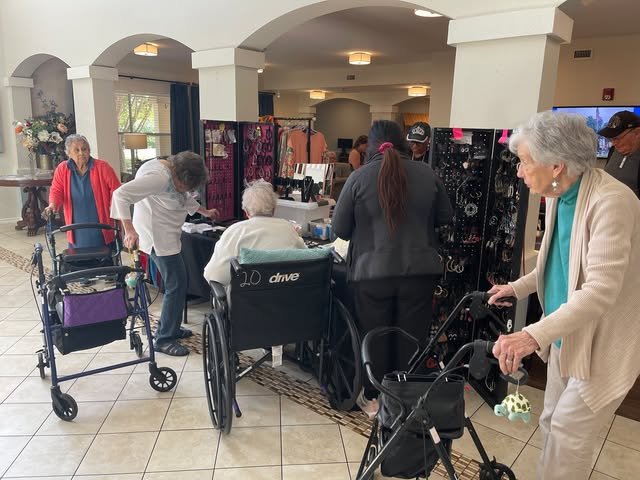
Respite care in San Antonio TX can give a family caregiver time to rest, work, attend an appointment, or recover from the demands of daily support. The National Institute on Aging describes respite care as short-term relief that may be provided at home, at an adult day center, or during a short stay in a residential setting. It can be planned as a recurring break or arranged during a transition. The purpose is not to withdraw from a loved one’s life, but to place dependable support around both the caregiver and the person receiving care.
Three common forms of respite support
The right arrangement depends on the person’s routines, mobility, supervision needs, and comfort with unfamiliar places. It also depends on how much time away the caregiver needs and who can manage transportation.
In-home respite
A caregiver comes to the home to help with agreed tasks and supervision while the family caregiver is away or resting. This can preserve familiar surroundings and reduce travel. Before scheduling, families should clarify the tasks included, minimum hours, overnight availability, and who provides a backup if the assigned caregiver cannot come.
Adult day health care
Adult day programs provide care away from home for part of the day. They may suit someone who can manage the trip and participate in a group setting. Ask about opening hours, personal care assistance, meals, accessibility, transportation, and how staff respond when a participant becomes tired or wants a quieter space.
A short residential stay
A residential stay can cover several overnights, subject to a community’s availability and assessment process. It may be useful when a caregiver travels or when a family wants to understand how a person manages in a different setting. Ask what the stay includes, how personal preferences are recorded, and how staff communicate with family. A short stay is not automatically available simply because a community offers assisted living.
For someone living with dementia, the Alzheimer’s Association’s respite care guidance can help families consider in-home, day-program, and residential options. Memory support should be discussed in terms of supervision, routine, personal care, and environment, not promised changes in memory or behavior.
A local budget for respite care in San Antonio TX
The CareScout Cost of Care Survey 2025, with data collected from July through November 2025, provides planning figures for the San Antonio Area. These are broad market references, not quotes for occasional respite or prices for any particular community.
| Care type or schedule | Survey figure | Planning use |
|---|---|---|
| Adult day health care | $90 per day; $1,950 per month | Compare day-based support with other options |
| Non-medical in-home caregiver | $30 per hour | Understand the hourly starting point |
| In-home care at 20 hours a week | $2,600 per month | Consider a limited recurring schedule |
| In-home care at 44 hours a week | $5,720 per month | Consider CareScout’s standard schedule |
| In-home care at 168 hours a week | $21,840 per month | Understand around-the-clock home coverage |
| Assisted living | $5,885 monthly median | Compare a residential monthly benchmark |
The difference between in-home care at 44 hours a week and the assisted living monthly median is $165, with assisted living higher. That does not make the two arrangements equivalent. Families should compare waking-hour coverage, overnight supervision, meals, personal care, laundry, transportation, and home upkeep. A monthly adult day figure also should not be treated as the cost of a few occasional visits. Request a written schedule and ask about minimums, deposits, supplies, and additional charges.
Putting assisted living and nursing home figures in context
CareScout’s survey places San Antonio Area assisted living at a $5,885 monthly median and $70,620 annually. The Texas statewide figures are $5,666 monthly and $67,992 annually, making the metro median $219 higher per month. The national figures are $6,200 monthly and $74,400 annually, with the San Antonio Area median $315 lower per month. These comparisons describe ongoing care markets, not short-stay rates.
For a different level of residential care, the San Antonio Area nursing home figures are $6,372 monthly for a semi-private room and $8,213 monthly for a private room. Those amounts are $487 and $2,328 higher than the assisted living monthly median, respectively. Nursing home figures should not be used as assisted living or respite quotes; the settings and care needs being compared are different.
Medicare, Medicaid, insurance, and VA payment questions
Medicare’s long-term care coverage guidance says Medicare does not cover long-term custodial care when that is the only care needed, and most long-term care is custodial. Families should not assume that a respite stay, day program, or non-medical home caregiver will be paid by Medicare.
Texas Medicaid’s STAR+PLUS Home and Community Based Services program can pay for assisted living services for members who meet nursing facility level of care, in a licensed facility contracted with the member’s managed care organization. Members pay room and board and any applicable copayment, and interest lists may apply. This does not confirm coverage for a particular respite stay. Ask the managed care organization directly whether the member’s plan authorizes respite and what setting, assessment, and approvals are required.
Long-term care insurance may pay for assisted living or other services, depending on the policy. Benefits commonly begin after an elimination period and when policy requirements involving daily activities or cognitive impairment are met. Read the policy and ask whether short stays, adult day services, or in-home respite qualify.
For eligible wartime-era Veterans and surviving spouses, VA Aid and Attendance can increase a VA pension when criteria involving daily activities or other circumstances are met. The current VA pension rates list a Maximum Annual Pension Rate of $29,093 for a Veteran with no dependents, equivalent to a maximum $2,424 monthly if countable income were zero. With one dependent, the figures are $34,488 annually and $2,874 monthly. The net worth limit is $163,699 for December 1, 2025, through November 30, 2026. Pension is the applicable annual rate minus countable income, and certain unreimbursed care expenses can affect that calculation. These figures are not automatic respite payments; eligibility, income, assets, and VA review of prior asset transfers all matter.
The Eldercare Locator connects families with local Area Agencies on Aging. A local agency can help identify Bexar County resources and explain where to ask about Medicaid interest lists, caregiver support, and available programs.
How to prepare for a first short residential stay
A calm handoff begins with specific information rather than a large folder of unexplained documents. Keep the essentials organized and confirm who will review them before arrival.
- Confirm the arrangement. Put arrival and departure dates, current charges, included services, cancellation terms, and any minimum stay in writing.
- Describe the daily routine. Share preferred waking and sleeping times, food preferences, personal care habits, mobility needs, communication style, and activities that feel familiar.
- Organize health information. Provide requested medication lists and instructions, allergies, clinician contacts, emergency contacts, and any documents the setting asks families to supply.
- Pack for comfort and easy identification. Label clothing and personal items, bring needed mobility equipment and toiletries, and include a few familiar objects without sending irreplaceable valuables.
- Agree on communication. Identify the family contact, ask when updates will be provided, and clarify how questions, visiting, transportation, and an early departure would be handled.
Afterward, discuss what worked well and what caused difficulty. Separate observations about meals, sleep, personal care, and communication from assumptions about what a longer arrangement would be like.
Local and Texas-specific checks before deciding
The William Senior Living is at 9203 Cinnamon Hill Dr in northwest San Antonio’s 78240 area of Bexar County. Families can consider travel along Loop 410 and Interstate 10 from Leon Valley or the South Texas Medical Center area when planning a visit. The home offers assisted living in San Antonio and memory care. Those service categories do not confirm that respite stays are available. Families should call to ask about short stays, care-level compatibility, and current rates rather than treating survey medians as the home’s prices.
Texas Health and Human Services licenses assisted living facilities and distinguishes Type A from Type B settings. In general terms, Type A residents can evacuate without help, follow emergency directions, and do not need routine nighttime attendance. Type B residents may need staff help to evacuate, may not follow emergency directions, and may need nighttime attendance. Facilities advertising care for people with Alzheimer’s disease or related disorders must hold the required Alzheimer’s certification. Families can ask any community being considered about its current license, emergency procedures, overnight staffing practices, and applicable certification.
Making respite part of a workable care plan
A useful first plan identifies the caregiver’s most pressing need, the least disruptive setting, and the information required for a safe handoff. Respite care in San Antonio TX can then be evaluated through direct observations and clear written terms. Whether the arrangement involves a few hours at home, adult day support, or an available residential stay, the decision should preserve the older adult’s dignity while giving the caregiver a realistic opportunity to rest.
Frequently asked questions
What is respite care in San Antonio, TX?
Respite care is short-term support that gives a family caregiver a break. In San Antonio, it may be arranged as in-home help, adult day health care, or a short residential stay, depending on availability and care needs. It can be occasional or planned on a recurring basis. Before scheduling, families should confirm supervision, personal care, accessibility, transportation, and communication so the arrangement matches both the older adult’s needs and the caregiver’s reason for time away.
How much should families budget for respite care in San Antonio?
CareScout’s 2025 survey lists San Antonio Area adult day health care at $90 per day and $1,950 per month. A non-medical in-home caregiver is listed at $30 per hour, with monthly figures of $2,600 at 20 hours a week and $5,720 at 44 hours a week. These are planning references, not short-stay quotes. Ask each provider about minimum hours or stays, deposits, included services, additional charges, and current rates before setting a budget.
Does Medicare or Texas Medicaid pay for respite care in San Antonio?
Medicare does not cover long-term custodial care when that is the only care needed, so families should not assume it will pay for respite. Texas Medicaid’s STAR+PLUS Home and Community Based Services program can cover assisted living services for eligible members in contracted licensed settings, but that does not confirm coverage for a particular respite stay. Members pay room and board and any applicable copayment. Ask the managed care organization and local Area Agency on Aging about eligibility and authorization.
Can a short stay support a family caring for someone with dementia?
A short stay may give a dementia caregiver time away while another setting provides supervision, personal care support, daily structure, and a planned environment. It should not be presented as a way to improve memory or change the course of dementia. Before booking in San Antonio, ask how staff learn the person’s routines, communication needs, mobility needs, and responses to unfamiliar surroundings. Also ask how concerns and routine updates will be shared with family during the stay.
What should I ask The William Senior Living before a short stay?
Ask whether short stays are currently available, what length of stay can be arranged, the current rate, and which services or charges are included. The William Senior Living offers assisted living and memory care at 9203 Cinnamon Hill Dr in northwest San Antonio, but respite availability should be confirmed directly. Also ask about the care assessment, overnight supervision, medication procedures, family updates, what to bring, and how arrival, departure, or an early return home would be handled.
Talk with The William Senior Living
If you are weighing care options in San Antonio, call (737) 313-2131 or visit and tour. Our team can talk through current availability, rates and next steps. Please confirm all details directly, since published figures and listings change over time.
Sources
- CareScout Cost of Care Survey 2025
- VA Aid and Attendance and Housebound benefits
- VA pension rates (current)
- Medicare: long-term care coverage
- Eldercare Locator (U.S. Administration for Community Living)
- National Institute on Aging: What is respite care?
- Alzheimer's Association: respite care
- ACL: What is long-term care insurance
- Texas HHS: Assisted Living Facilities (ALF)
- Texas HHS STAR+PLUS Handbook 7200: Assisted Living Services
Cost figures are 2025 medians from the CareScout Cost of Care Survey and are not quotes for The William Senior Living. Program rules and benefit amounts were checked on the linked official pages in November 2026 and can change.